Friendly dwarfs, mysterious eyes, naughty elves . . .
and a moon made of Swiss cheese.
They’re all tasty legends about one of the world’s most popular cheeses – Swiss.
Swiss cheese goes back centuries to cows herded in lush alpine hills. Legend says that friendly dwarfs, called Bune Rods (or Rots), supposedly lived in the alpine area long before people arrived. When human settlers moved in, the Bune Rods made friends with them. The dwarfs taught the newcomers everything they needed to know about life in the alpine – local flora, medicinal herbs, and most important, how to make cheese.
History tells a different story.
During the summer, shepherds brought their herds to graze high in the lush alpine hills. That led to a milk surplus. Shepherds needed a way to preserve the milk. They made large cheese wheels that lasted a long time. It was called emmanter (emmantel) for the area where it was made.
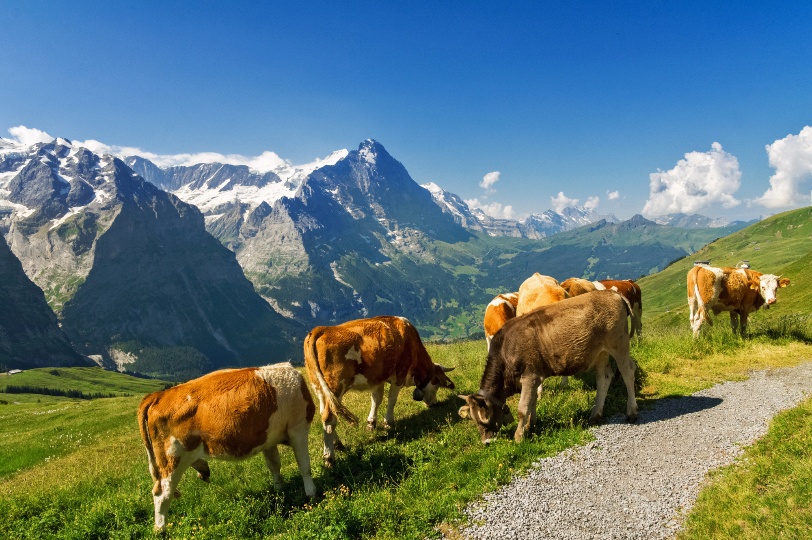
After the summer, the shepherds brought the cows back down to lower elevations.
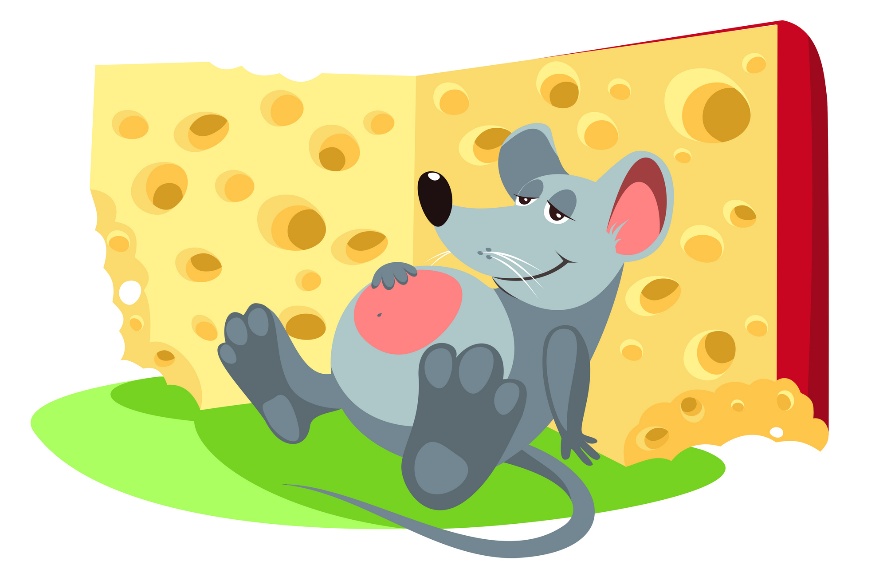
When the cheese was sliced it was riddled with holes or mysterious eyes. Legends claim that the eyes were made by naughty elves. Others credited the holes to hungry mice and cheese ghosts. One tale by Stu Klein, Hans and the Holey Cheese: The Truish Story of How Swiss Cheese Got Its Holes, tells the story of a charming mouse from the Swiss Alps. Curious, Hans the mouse followed the tantalizing smell, nibbled and tunneled his way through cheese – thus creating the holes.
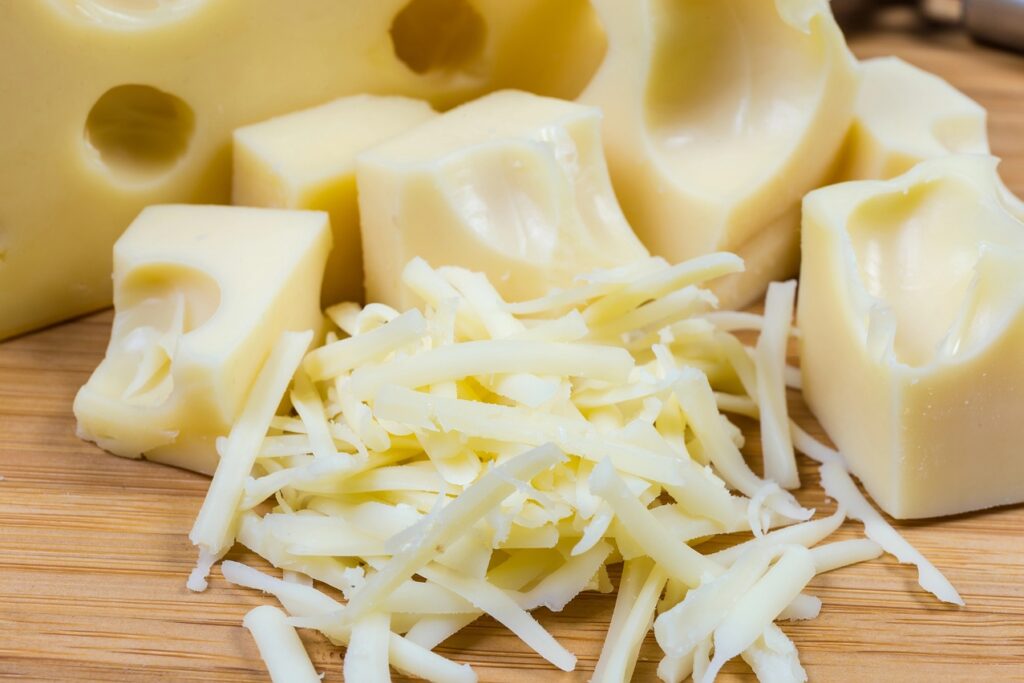
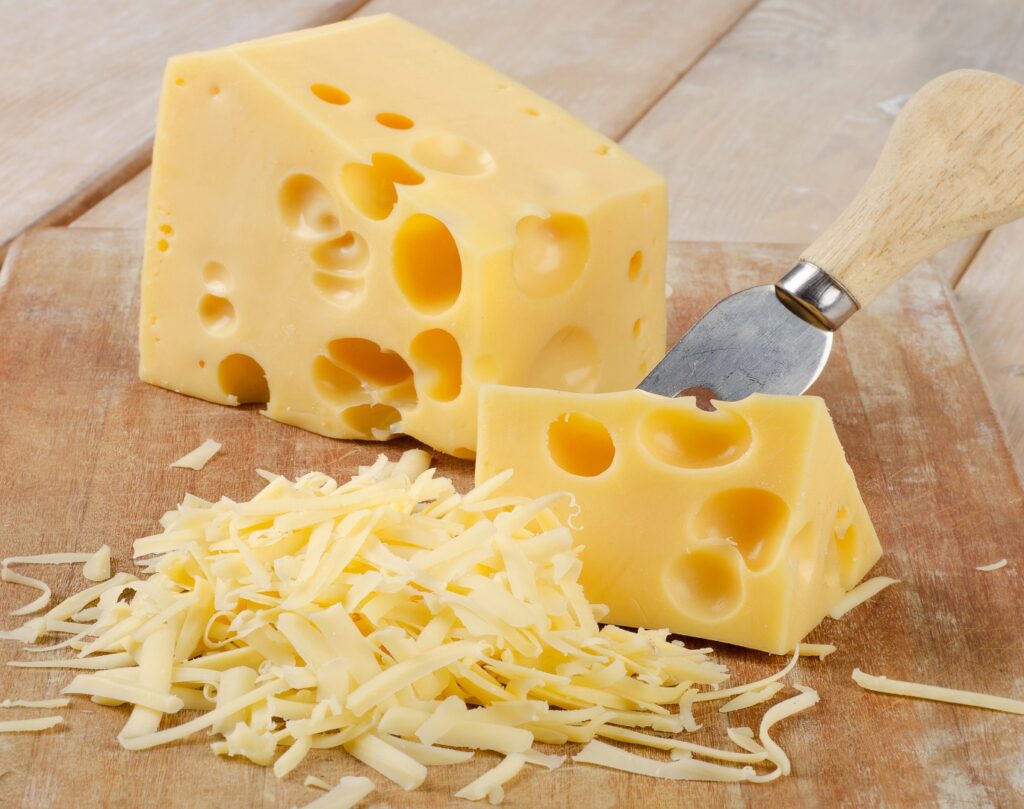
Again, history intervened. The not-fake-fact is that “eyes” are a result of a natural, harmless bacteria that produces carbon dioxide “holes” as the cheese ages.
And the moon . . . well it sure sounds tasty. Can moonrocks be melted in a grilled cheese sandwich or a fondue pot?
While Swiss cheese didn’t catch on globally until the 1800s, it was produced as far back as the 1300s. The House of Switzerland maintained that “Swiss cheesemakers conquered the world . . . because Swiss hard cheeses could be stored for a long time, they became a highly valued commodity throughout Europe, and their fame endures throughout the world to this day.”
The original name, emmantel, came from the alpine area where it was produced. As it spread around the world, different names emerged. Go to Europe and the United Kingdom, they call it emmentel; in America and Australia they call it Swiss cheese; in Israel it’s Emek; and in France it’s gruyére ou emmenthal.
Different styles, production, and uses spread around the world.
Many Swiss immigrants came to America in the 1800s. They settled in Green County, Wisconsin – along with their cheesemaking skills. The dairy industry was booming and “Swiss Cheese” became popular throughout the country.
Bunker Hill Cheese described it as “Swiss cheese became a symbol of alpine craftsmanship.”
By 1910, Monroe, Wisconsin, declared itself the “Swiss Cheese Capital of the U.S.A.” It had over 200 Swiss cheese factories.
Swiss cheesemaking also found a home in Amish (Pennsylvania Dutch) communities. Bunker Hill reported, “values of hard work and quality aligned seamlessly with Swiss methods . . . representing a bridge between old world tradition and modern tastes.”
Later, the heart of American Swiss Cheesemaking moved. In 1929 a Swiss immigrant, John Leeman, started Brewster Cheese in Ohio – eventually becoming the largest producer in America.
There were many innovations along the way.
The original or classic emmentaler was made of raw milk from cows fed only grass or hay. It was aged for 8 months or more. Americans decided to experiment – aging the cheese for one month, creating what is now known as baby Swiss. It is creamier with fewer and smaller holes, milder, and great for melting.
Today you can find countless varieties of Swiss cheese – from baby to lacy, aged to emmantel, low fat, hard, semi-soft, blocks to thin slices, gruyére to raclette . . . the list is very long. There are thousands of Swiss cheese festivals and awards from Ohio to Switzerland.
Whatever type you choose, Swiss Cheese is king.
Enjoy!