

What was the biggest heist in Canadian history?
Bank robbery? Diamonds? Gold? Guess again.
Maple syrup.
Why would anyone steal maple syrup?
It began with the Federation of Maple Syrup Producers (later renamed Quebec Maple Syrup Producers). According to Wikipedia, the Federation was given the power to set maple syrup prices – a “legal cartel.” The cost for producers was 25% of their crops.
No one likes a cartel – even a legal one.
People started to think outside the barrel. 2011 and 2012 was a boom year for maple syrup. The Federation needed more space to store their barrels of syrup. They found a minimum-security warehouse owned by the wife of Avik Caron. He was one of the “insiders.”
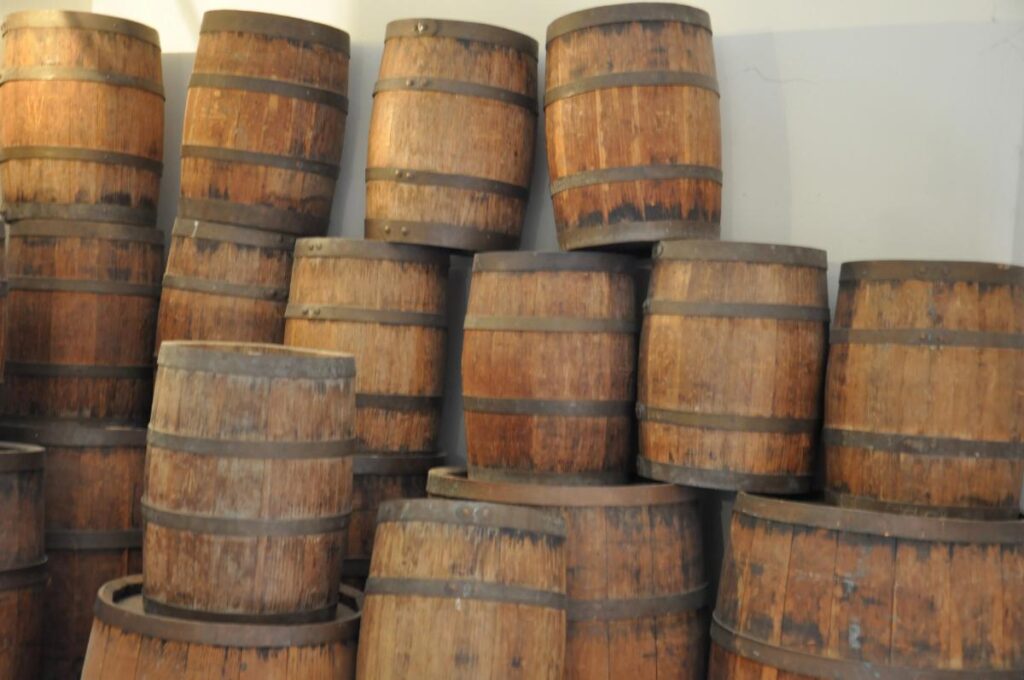
Richard Valliéres was the leader. He and his team siphoned off the Federation’s maple syrup into their own barrels, replacing it with water. Then they re-sold it. The scheme worked for a total of 9,571 barrels, valued, in Canadian dollars, at $18.7 million (equivalent to $25.2 million today).
Take that Oceans 11.
The team got lazy. They stopped replacing the syrup with water. One day a Federation Inspector tried to climb up what he thought were 600-pound barrels. The empty barrels crashed to the ground.
The sticky scheme unraveled.
It was easy to find the thieves. They were all insiders. Valliéres was sentenced to eight years in prison plus a $9.4 million fine. His father got two years. The reseller also spent two years in jail. Caron got five years behind bars and a $1.2 million dollar fine. Lastly, the trucker who transported the stolen syrup, served eight months in prison.
A few years later, the world was rewarded with a comedy series base on the scheme, The Sticky, over 30 books on Amazon, and a documentary touted as “the epic battle between cartels and the little guy.”
Fortunately, maple syrup, also known as brown gold, has a long, yummy history going far back before the sticky scheme.
No one knows exactly when maple sugar was discovered. Indian legends tell many stories. One, from O.Berk, claimed that Iroquois Chief Woksis threw his tomahawk at a maple tree in winter. When the sun rose, it “warmed the sap inside the tree, and from the hole sprung forth the tasty syrup.” His wife collected the sap and used it for dinner.
Another story, reported in the History of Maple Research Guide, claimed that maple syrup was a gift from “The Creator.” Glooscap – a legendary hero from the Wabnaki people (living in northeast U.S. and Atlantic Canada), found his entire village laying in the woods, silent, eyes closed, mouths open, catching sap from maple trees. Glooscap used his special powers, declaring “the sap would run again but only during the winter when the game is scarce, the lake is frozen, and crops do not grow.”
Did Glooscap make it happen?
Maine Maple Producers Association said that “the sugar in maple sap only appears where warm, sunny days and below-freezing nights follow each other for days.”
By 1609, the Indians showed European settlers how to make the brown gold. They bored holes in the maple tree trunks and collected the sap in wooden buckets. The sap was boiled down over an open fire or inside a special “sugar shack” built for that purpose.
Over the years, the process was improved.
By 1778, the Quakers manufactured and promoted maple sugar to boycott West Indian cane sugar produced by slave labor.
Thomas Jefferson, although a slave owner, supported the cause. In 1791, years before elected President, he described maple sugar as a “home grown alternative to slave-produced cane sugar from the West Indies.”
At the time, maple sugar cost less than cane sugar. In the late 1800s that changed when the price of cane sugar dropped below maple.
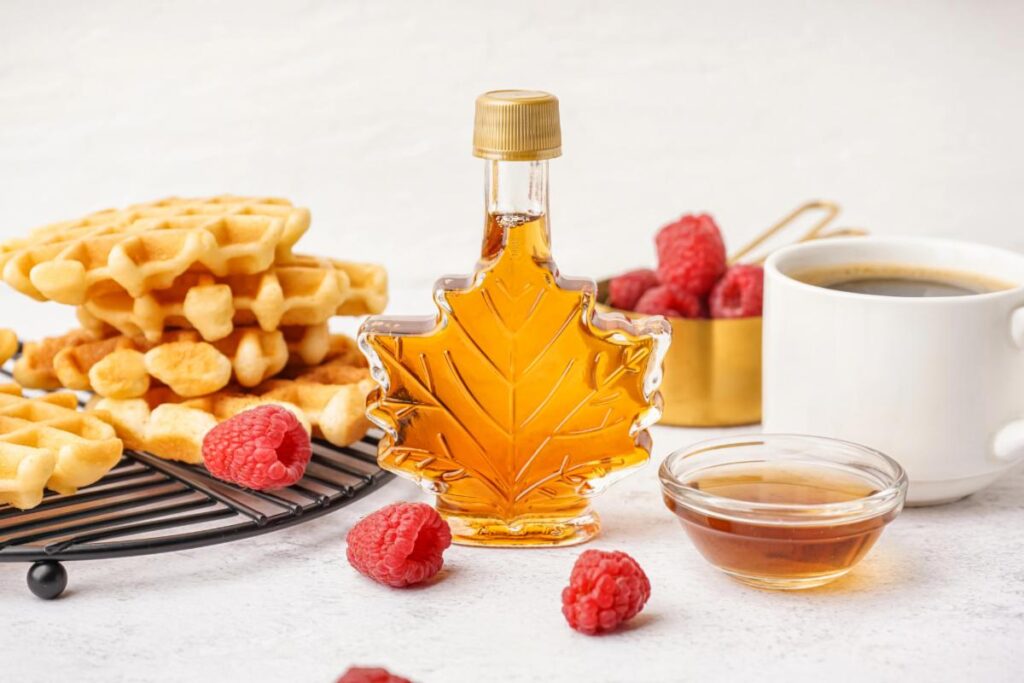
Today you can find maple sugar in many different forms – granulated, maple butter, spreads, jelly, candy, lollipops, and flavorings. According to Vermontmaple.org you can use it for “quick breakfasts to show-stopping desserts that bring sweet (and savory) flavor to every occasion.”
Maple flavor is so yummy that there are many imitations.
Mark Mancini in Mental Floss wrote that many popular brands use high fructose corn syrup, cellulose gum, and caramel coloring to “create an inexpensive substance which only somewhat resembles the genuine article.” They’re often labeled original, breakfast, or pancake syrup.
Fake brews.
Eighty percent of real maple comes from Canada – it takes 40 gallons of sap to make one gallon of syrup. Whether you use it for sweet or savory, topping your pancakes or sweetening your coffee, there’s nothing like the real thing.
Enjoy!


