
mobile logo
  • Home
  • About Me
  • Books
    • Broken Series
      • Broken By Truth
      • Broken by Birth
      • Broken by Evil
      • Broken by Madness
      • Broken by Men
      • Broken by Kings
      • Broken “The Prequel”
    • Haunted Family Trees
    • Book Web Minis
      • Are You Endangered? Well-being in the Age of Climate Change
      • Is Your Wonton Soup Endangered?
      • Paranormal Is My Normal
      • Soaring
      • Timepieces: Yesterday’s Stories Today
      • Selfies: Picture Perfect
      • The Old Lady Who Went To Sleep and Woke Up Young
      • Pocket Cash: Your Happy Money
      • Is There A Psychopath in Your Life?
  • Photography
    • Macro
    • Abstracted Reality
    • Nature
    • Street
  • Blogs
    • Photo Psychology
    • Haunted Family Trees
    • Linked In Blogs
  • All About Climate Change

A CHEESY STORY: Part I

June 12, 2023
by Dr. Jeri Fink
2 Comments

What’s your favorite? Sharp cheddar or pepper jack? Honey gouda or cave-aged gruyere?

American or Swiss?

Imagine the cheese that you’re eating was first made nearly 8,000 years ago. People ate cheese before they started to record history. That’s a long time ago. No one knows where cheese originated but it was probably from a lot of different places at the same time.

Let’s go back to the prehistoric Neolithic world, about 12,000 years ago. After the end of the Ice Age, nomadic hunter-gatherers modified their lifestyles. Archeologists call it The Agricultural Revolution. People started to farm, domesticate animals, and settle down in one place.

The farms grew Neolithic Founder Crops. Most were from wild species like wheat, barley, peas, and lentils. The first animals to be domesticated were dogs, followed by goats, pigs, sheep, and cattle. This happened all around the world.

What does that have to do with cheese?

In one word: milk.

It probably started by chance. According to Bethany Moncel in The Spruce Eats, cheese “was most likely discovered . . .  during the transport of fresh milk in organs of ruminants [hoofed mammals] such as sheep, goats, cows, and buffalo.”

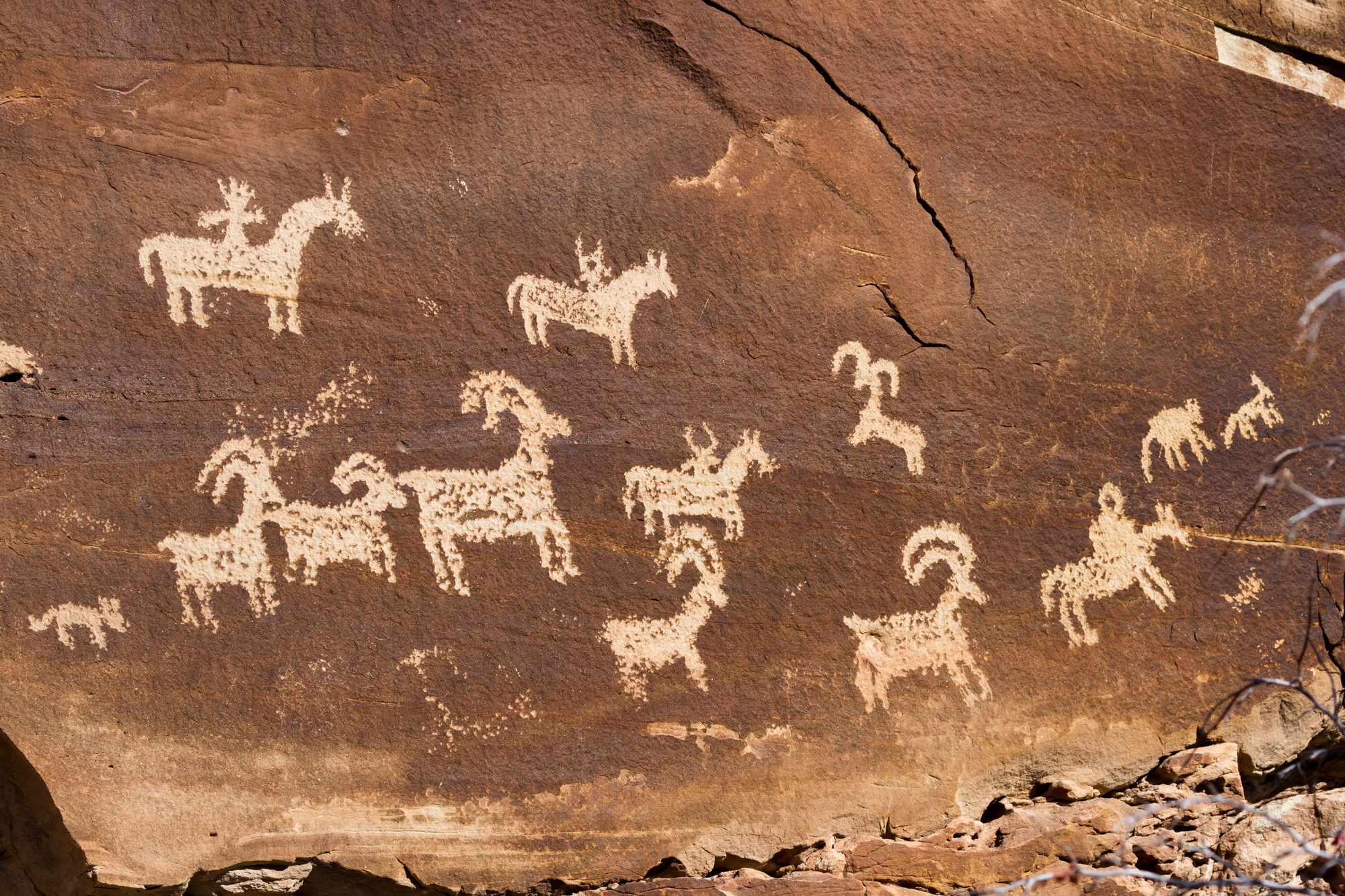
Legend says that an Arab shepherd, carrying a sheep’s belly full of milk, had to walk home through the scorching desert. At the end of his journey the shepherd discovered that the milk had separated into curds and liquid (whey). “Without refrigeration,” Moncel noted, “warm summer heat with residual rennet in the stomach naturally curdled the milk to produce the earliest forms of cheese.” (see rock painting below)

It might not sound very tasty but without cardboard cartons, pails, and glass bottles how else could you carry milk?

Drain the liquid, salt the curds and you have cheese – high protein, easily digested, with a long (shelf) life – no cookbook needed.
 

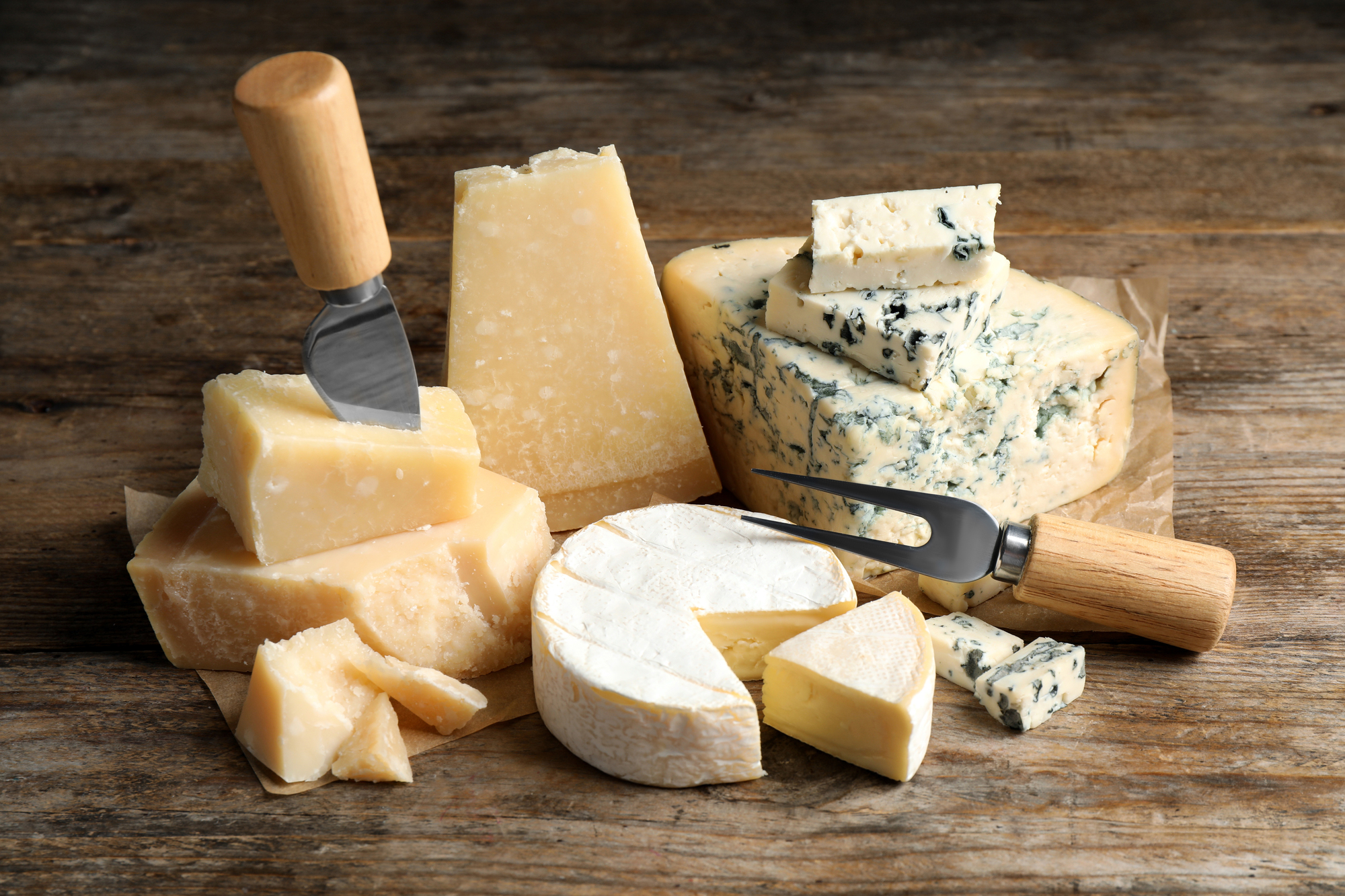
The word cheese comes from Latin meaning to ferment or sour. From the wealthy to the poor, royalty to workers, and everyone in-between, cheese became part of daily life.

The early cheese was probably salty, sour, and strong-flavored, similar in texture to today’s feta and cottage cheese. The idea took hold and spread.

Lucky for us.

Consider Homer, a famous poet in ancient Greece. Forget the chubby cartoon character, Homer Simpson.

The Greek Homer wrote about mythology, and in two of his most famous and lasting works, The Iliad and The Odyssey (800 BC) he talked about cheese made by a Cyclops, and how the heroes of the Battle of Troy survived by eating cheese and wine.

Homer wasn’t the only ancient Greek who mentioned cheese. Hippocrates, today known as the Father of Medicine, and philosopher Aristotle, both appreciated the power of cheese. By then, Greeks were also enjoying cheesecakes and other recipes, often eaten with honey. The ancient Greeks improved cheesemaking, added flavors, textures, and spread their knowledge throughout the Mediterranean basin.

Cheese and cheesemaking in ancient Rome probably came from Greek slaves.  The Romans improved the process, flavor, and texture. They produced hard, soft, and smoked cheeses. Historical records indicate that cheese was eaten almost every day in the Empire and cheesemakers were seen as artists. According to author J. L. Vieites in A Brief Cultural History of Cheese, “Cheese, olives, and raisins made up the meager rations of the Roman soldiers.”

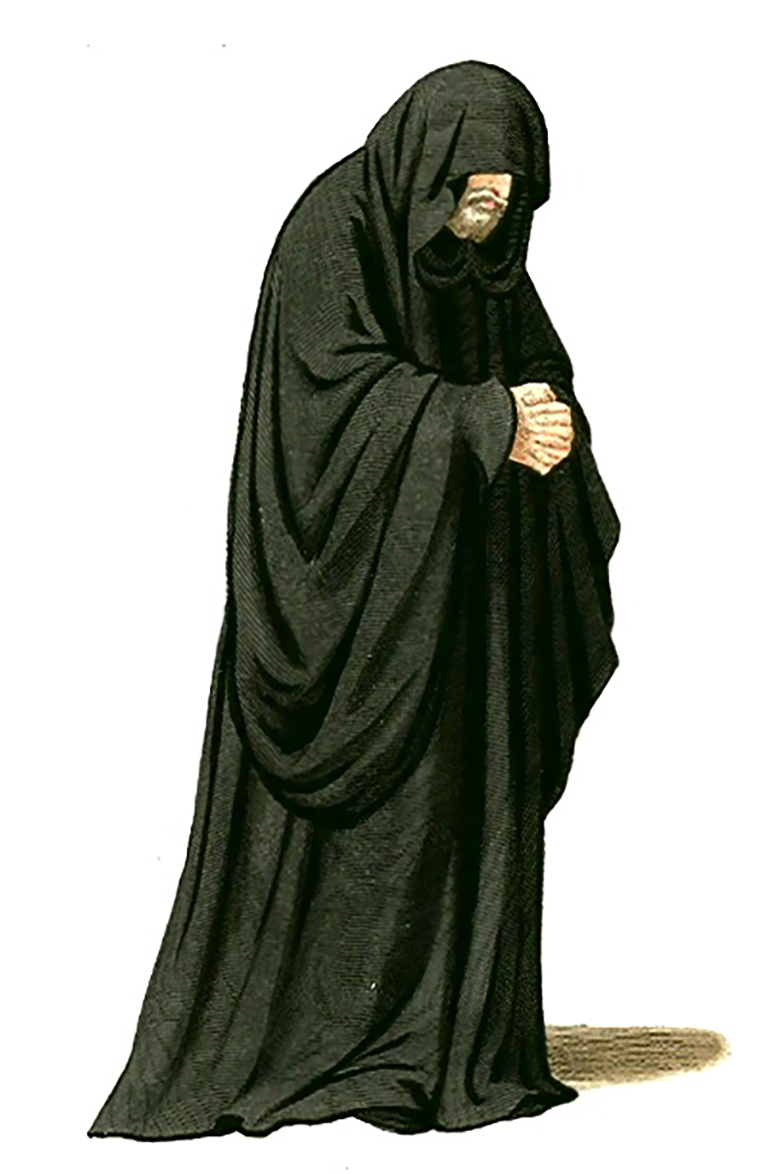
Many of today’s most popular cheeses came later, during the Middle Ages. Cheddar was introduced in the 1200s, parmesan in the 1500s, and gouda in the 1600s. Monks created a lot of our favorites. In France, 70% of cheeses today originated in monasteries, including muenster, port salut, and semi-soft blue cheese. In Serbia-Croatia, Trappist Monks produced limburger and in Italy, the Benedictine Monks made parmigiano.
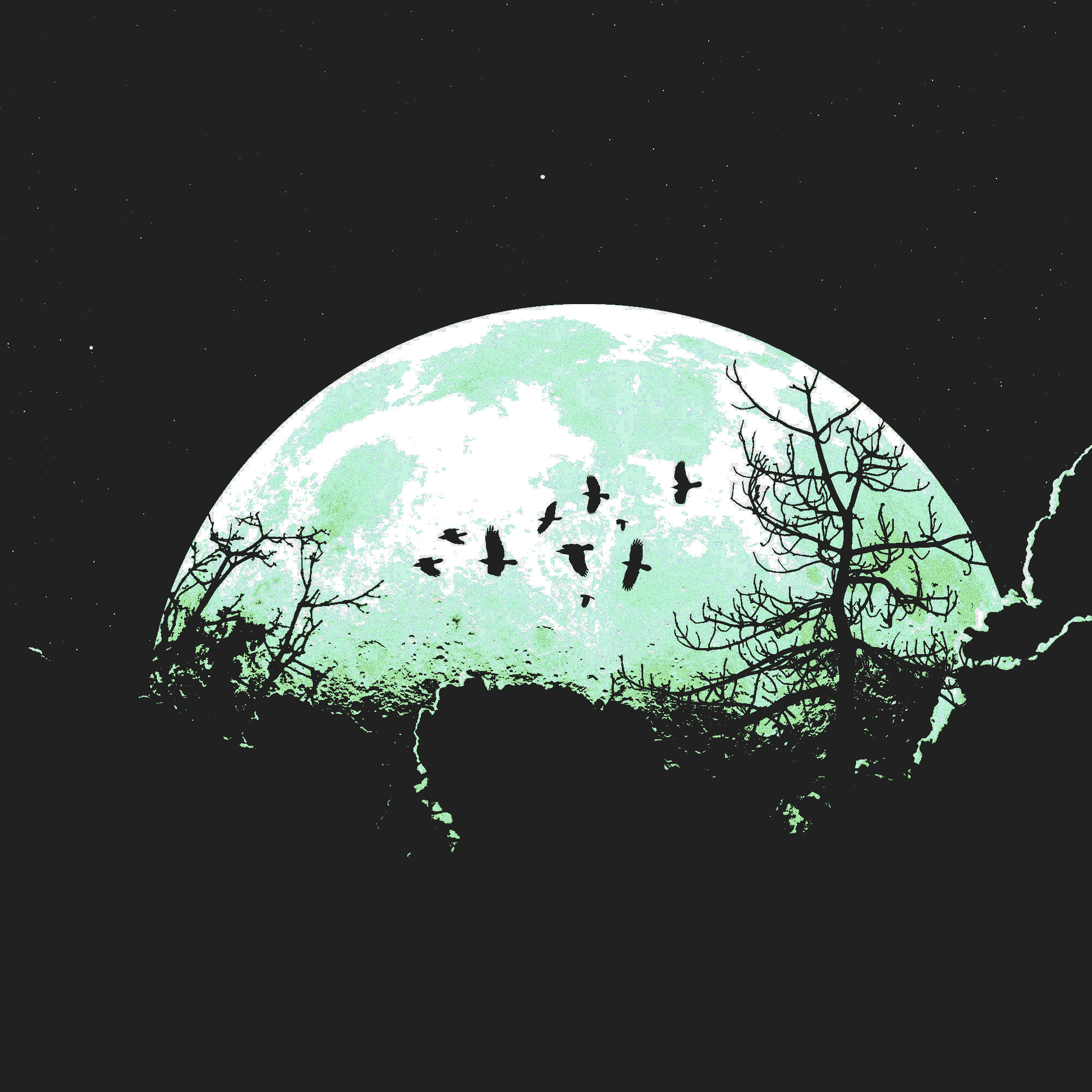
In 1546, the book Proverbs was published by British author and playwright, John Heywood. He included the saying that “The moon is made of a greene cheese.” It came from a fable about a fool who saw the moon reflected in water and believed it was a round cheese wheel.

Maybe he had a point.
 

*Look for A Cheesy Story Part II: The Best, The Fakes, and The Stinkiest for the modern cheese story.


About the Author
We live in crazy world. It's hard to guess what comes next. I thrive on change, people, and ideas. I've published 37 books and hundreds of blogs and articles. As an author, photographer, and family therapist, my blogs combine the serious, the funny, and the facts. Each blog is a story that informs and entertains readers. Please join me!
Social Share
2 Comments
  1. David Ben Horin June 13, 2023 at 8:05 am Reply

    But who invented cheesecake?

  2. Craig Oldfather June 16, 2023 at 5:17 pm Reply

    Wonderful! I think if I had to choose just one food to live on it would be cheese, and now I know much more about it! What a rich and entertaining history. Only problem is, like all your blogs, it makes me hungry for the subject food and I don’t have any on hand! I really look forward to the Stinkiest cheeses in your Part 2…I’ve always wondered about Stinking Bishop….

Leave a Reply to Craig Oldfather Cancel reply

*
*

Recent Posts

  • Does Your Coffee Have Superpowers?
  • Does Your Coffee Have Superpowers?
  • FOOD FIGHT!
  • Where’s Your Beef?
  • WHERE’S YOUR BEEF?
  • WHERE’S YOUR BEEF?
  • WHAT’S IN A MEAL?
  • ARE FRENCH FRIES REALLY FRENCH?
  • ARE FRENCH FRIES REALLY FRENCH?
  • LIVE BY YOUR FORK!
  • FOOD FUNNIES
  • HAPPY BIRTHDAY!
  • DOES A BUFFALO HAVE WINGS?
  • SMOOTH OR CHUNKY, WITH JELLY OR A SPOON. What’s your pleasure?
  • A PICKLED HISTORY
  • FEAST ON A WIN-WIN
  • ARE POLITICS IN YOUR PANCAKES?
  • ARE POLITICS IN YOUR PANCAKES?
  • WHAT’S YOUR FORTUNE?
  • FROM CAMPFIRE TO HILLBILLY HASH: What’s the oldest snack food in history?
  • HAVE YOU EVER SWALLOWED A CLOUD?
  • IS FRIED CHICKEN MORE AMERICAN THAN APPLE PIE?
  • HUSH, PUPPY
  • A BROWNIE BY ANY OTHER NAME
  • What’s your fancy – brownie points, an old camera, or ugly mythical creatures that love to clean house at night? They’re all brownies but not the yummy chocolate treat we love today. Americans chow down 1.4 billion edible brownies a year in different flavors, shapes, and sizes. Where did it begin? In the case of brownies no one knows for sure. Fortunately, fiction is often more fun than fact. Which brings us to the question – were brownies a mistake, an accident, or a special treat for wealthy, turn-of-the-nineteenth-century ladies? Let’s start with a mistake and an accident. Chocolate was very popular in the nineteenth century. Many people believe that an absent-minded chef was mixing batter for a cake and mistakenly left out the flour. Oops. Others say a housewife was out of baking powder and accidently ended up with “flattened cakes” that her guests loved. In both cases, the results were delicious, unplanned fudgy confections. The most popular story comes from celebrated socialite Bertha Palmer (see below). Bertha was married to Potter Palmer, a business tycoon who, on their wedding day, gave her the Palmer House Hotel in Chicago (now a Hilton Hotel). Nice gift. In 1893 Bertha wanted to do something special for
  • CHOUX DOWN!
  • A CHEESEY STORY: Part I
  • A CHEESY STORY: PART 2 The Best, The Fakes, and The Stinkiest
  • DOES IT REALLY MELT IN YOUR MOUTH AND NOT IN YOUR HAND?
  • WHEN WAS THE LAST TIME YOU ATE 100-YEAR OLD COMFORT FOOD?
  • From One Penny to Two Billion Dollars
  • WHAT’S FOR LUNCH? From Hillel to The Earl and Beyond
  • KE-TSIAP TO HEINZ – Where Did Ketchup Come From?
  • SOMETHING OLD, SOMETHING NEW – Married in Tex-Mex
  • SOMETHING OLD, SOMETHING NEW – Married in Tex-Mex
  • TWISTED BILLIONS
  • ARE YOU A COOKIE MONSTER?
  • TWINKIE – The Gourmet Junk food
  • SUSHI TONIGHT?
  • SUNDAE WARS
  • SLICED IN CHILLICOTHE
  • CHICKEN FEED FOR PEOPLE
  • DEEP ROOTS: Meet the Sweet Potato
  • ARE BLUE PUMPKINS SAD?
  • ARE BLUE PUMPKINS SAD?
  • ARE BLUE PUMPKINS SAD?
  • ARE BLUE PUMPKINS SAD?
  • ARE BLUE PUMPKINS SAD?
  • ARE YOU AS UN-AMERICAN AS APPLE PIE?
  • ARE YOU AS UN-AMERICAN AS APPLE PIE?
  • FROM KINGS TO KIDS: The Sticky Story of Marsh-Mallows
  • FROM KINGS TO KIDS: The Sticky Story of Marsh-Mallows
  • WHAT’S YOUR RAMEN?
  • WHAT’S YOUR RAMEN?
  • FROM LONGHOUSE TO YOUR HOUSE
  • WHAT’S YOUR RAMEN?
  • FROM INDIANS AND CONQUISTADORES TO SOUL FOOD, KICKSTARTER, AND YOUR TABLE
  • “Traditional” potato salad probably goes back to the 1700s. Frederick the Great of Germany, ordered that potatoes should be cultivated. The wheat crop had failed and he needed to feed his army. It wasn’t long before kartoffel (potatoes) became kartoffelsalat (potato salad). The salad was made by boiling potatoes in wine or a mixture of vinegar and spices and served warm. Sometimes they added bacon and sugar. German immigrants brought the recipe to the New World, and the American, Amish, and other regional potato salads were born. The recipe was also adapted by French, Greek, Polish, Israeli, and Austrian cooks. Eventually Japan, Korea, Vietnam, China and others created their own versions. Today potato salad is an American icon. There are countless variations related to community, history, family, and location. Culinary historian and author, Michael Twitty, noted that “like a child raised to believe that my church is the only true one, I have had to suspend the idea that I or my culture owns the sole, true potato salad.” There are so many recipes that it fills hundreds of cookbooks, websites, and family ¬recipe boxes. There’s Amish style, drizzled sweet creamy dressing over potatoes, celery, boiled eggs, onion, and sweet pickle relish How about soul food where Rosalind Cummings-Yeates in The Takeout explained that southern cooks prefered mayonnaise and sweet relish while northerners prefered dill and sour cream. Dr. Jon Paul Higgins declared in The Kitchen that his mother’s potato salad was the best, calling it “pure black joy.” Mama used mustard, relish, Lawry’s seasoning salt, and mayonnaise. Doesn’t sound very fancy. That’s all before your grandma’s recipe is added to the mix – along with celebrity chefs like Bobby Flay, Ina Garten, Martha Stewart, and Pioneer Woman’s “perfect potato salad.” Then there are the infamous potato salads – the ones that get attention for things other than their recipes. Guinness World Records awarded the largest serving of potato salad to Spilva Ltd, Latvia. It used over 1,102 pounds of mayonnaise, 2,072 pounds of boiled potatoes, 749 pounds of sausage, 6,000 pounds of boiled eggs, 440 pounds of canned peas, 310 pickled cucumbers, and 33 pounds of salt. That’s quite a mouthful. Not to be outdone, Ohio native Zach “Danger” Brown tried to raise $10 on Kickstarter to make his potato salad. He got $5,500 instead. He used the extra money to throw a party called “Potato Stock” where hundreds of pounds of potatoes were served. Don’t forget Mr. Potato Head or gag books like Always Be Yourself Unless You Can
  • STUMP FOODS: MUNCHING FOR VOTES
  • DEEPER ROOTS

Send Me a Message

Cleantalk Pixel