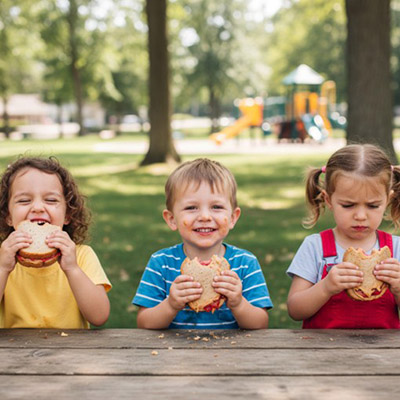
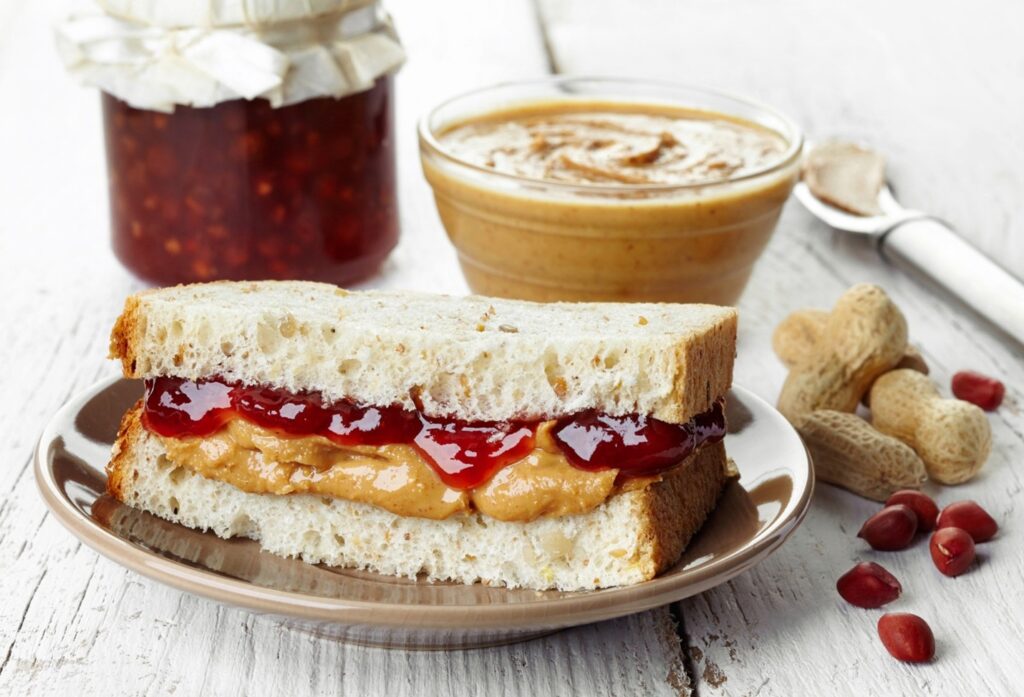
You’re the peanut butter to my jelly. Slightly nutty, kinda sticky, and oddly perfect together.
A popular saying on TikTok
There are three ingredients in the PB&J sandwich: bread, peanut butter, and jelly. They all have different stories. Put them together and it’s an American legacy – a marriage made in heaven – for both kids and adults.
Let’s start with the oldest – bread. It’s an ancient food, going back thousands of years.
Humans began baking bread long before recorded history. It’s no surprise that bread is considered the “staff of life.”
Before 1928, everyone sliced their bread with knives. Slicing could be a very messy process – crumbs, uneven slices, even a touch of blood from a slipped knife.
Until Otto Rohwedder.
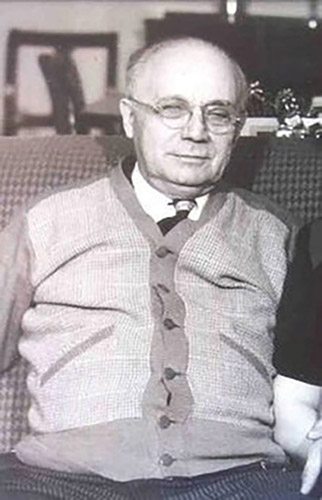
Rohwedder was born in 1880 and grew up in Davenport, Iowa. He had a passion for inventing machines. His biggest idea was to develop an automatic bread-slicing machine. By 1917, he was almost there. He had a prototype and blueprints for his invention.
Then fire struck.
Rohwedder lost everything.
He refused to give up. By 1927 he designed a revolutionary new machine that not only sliced bread but also wrapped it straight from the oven.
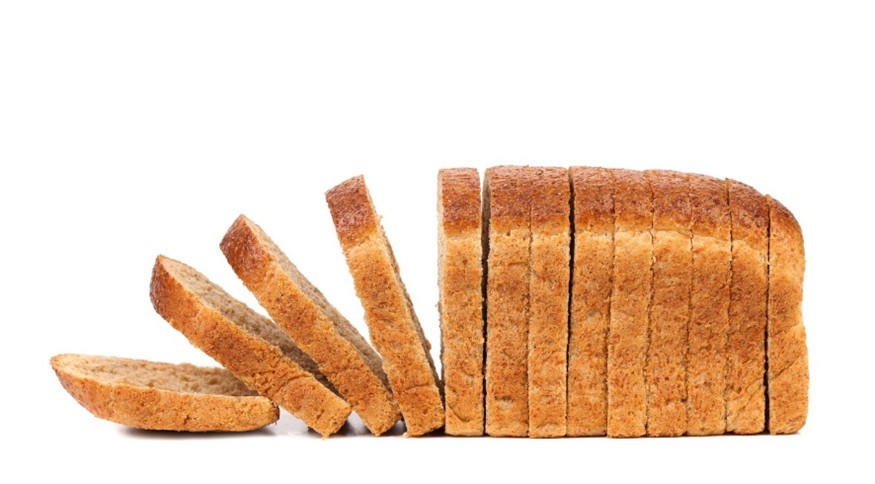
According to Kerry J. Byrne, Fox News “Few people in the industry believed that bread could be automatically sliced as it came off the assembly line.”
Rohwedder was sure that his new machine would revolutionize bread-making, He contacted Frank Bench, his friend, baker, and owner of the struggling Chillicothe Baking Company.
Bench seized the opportunity.
On July 8, 1928, Rohwedder’s thirteen-year-old son, Richard, caught the first, commercially-sliced loaf of bread. Every slice was perfect – way better than the old-fashioned way.
Today, sliced bread is eaten around the world.
The story of jelly also reaches far back in time. Ancient Romans cooked fruits in honey. Medieval crusaders used cane sugar to make and preserve fruits. In 1869 things changed with Dr. Thomas Welch.
Welch was a successful Methodist minister until his voice failed him. He switched gears and turned to dentistry, building a successful practice. As prohibitionists, he and his son Charles, developed a pasteurized, non-alcoholic grape juice suited for church services.
In 1918, father and son introduced and patented a jelly-like spread, Grapelade. World War One hit and the U.S. Army bought up Welch’s entire inventory. Lunagrown reported that when the troops returned home they demanded more Grapelade.
Five years later, Welch’s beloved concord jelly, known as “pure grape spread” was launched.
Today, Welch’s is a world leader in grape products.
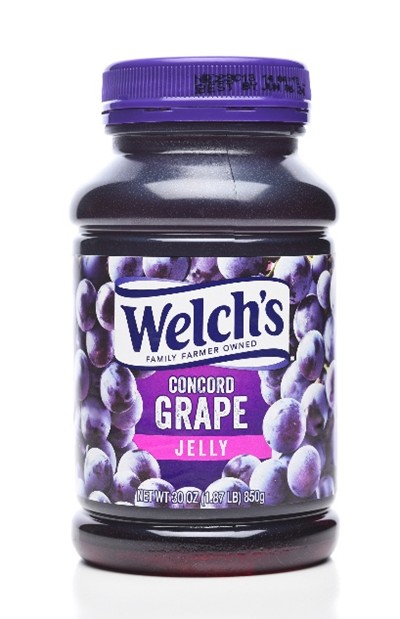
The marriage of peanut butter, jelly, and bread was on its way.
In 1884 Canadian Marcellus Edson patented “peanut paste” – reminiscent of the Incas and Mayans. Recognizing its potential, John Kellogg (of cereal fame) patented a process for making peanut butter from raw peanuts. He marketed it as a nutritious food for people with bad teeth who had trouble chewing solid food
Given the state of dental care, it was a great idea.
Later, in 1928, Joseph Rosefield invented a process to make smooth peanut butter. He eventually sold it under the name Skippy. Rosefield mixed small pieces of peanuts into the butter and created two types – smooth and chunky.
Procter & Gamble later launched a new peanut butter named Jif. It included sugar and molasses.
Now for the sandwich.
According to Jewish history, Hillel the Elder, a sage living in the first century, followed the commandment to eat lamb, matzoh, and bitter herbs wrapped in flatbread. Since then, the Hillel Sandwich is eaten between two pieces of matzoh at every Passover Seder.
More recently, in 1762, the Earl of Sandwich was given credit for being first. The National Peanut Board reported that he invented the sandwich “because he wanted to eat his meal with one hand during a 24-hour gambling event.”
The Earl preferred meat sandwiches. Although not first, the Earl popularized the name and the idea.
It took a few more centuries for the PB&J sandwich to become widespread.
Julia Davis Chandler published the recipe in 1901 in the Boston Cooking School Magazine.
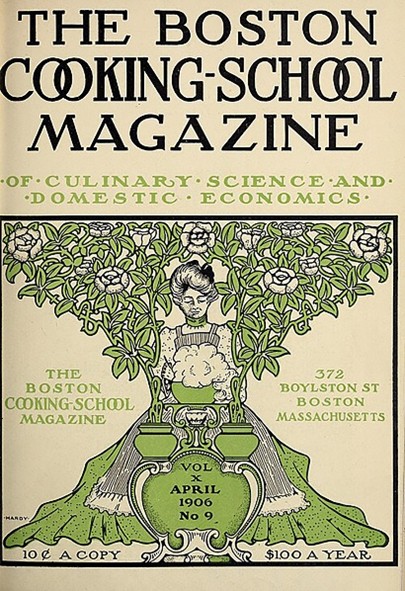
The National Peanut Board reported that she “used currant or crab-apple jelly and called the combination delicious and as far as she knew, original.”
PB&J came of age during World War Two. The sandwich was on U.S. Military ration menus – part of the American soldier’s life. When the war was over, the PB&J legacy was established.
Linda Rodriguez McRobbie reported in The Saturday Evening Post that according to some estimates, “the average American will consume nearly 3,000 peanut butter and jelly sandwiches in their lifetime; if those sandwiches were stacked on top of each other, they’d form a delicious, precarious tower taller than the Statue of Liberty.”
That’s a lot of PB&J.