

Skiers wearing bikinis?
There’s a heat dome over the west, floods in Hawaii, and snow in the north. The official start of spring in the northern hemisphere – where days equal nights (vernal equinox) – is behind us. Spring has rolled in our age of climate change – when we celebrate the end of winter with festivals, rituals, and tasty food.
Like spring rolls.
South China Morning Post reported that spring rolls came from the Eastern Jin Dynasty (China), over 1600 years ago, “with the concept of combining spring vegetables into a single dish.” They ate thin pancakes and fresh veggies, symbolizing renewal, growth, and hope for health and abundance.
It evolved into a rolled food, along with many colorful legends.
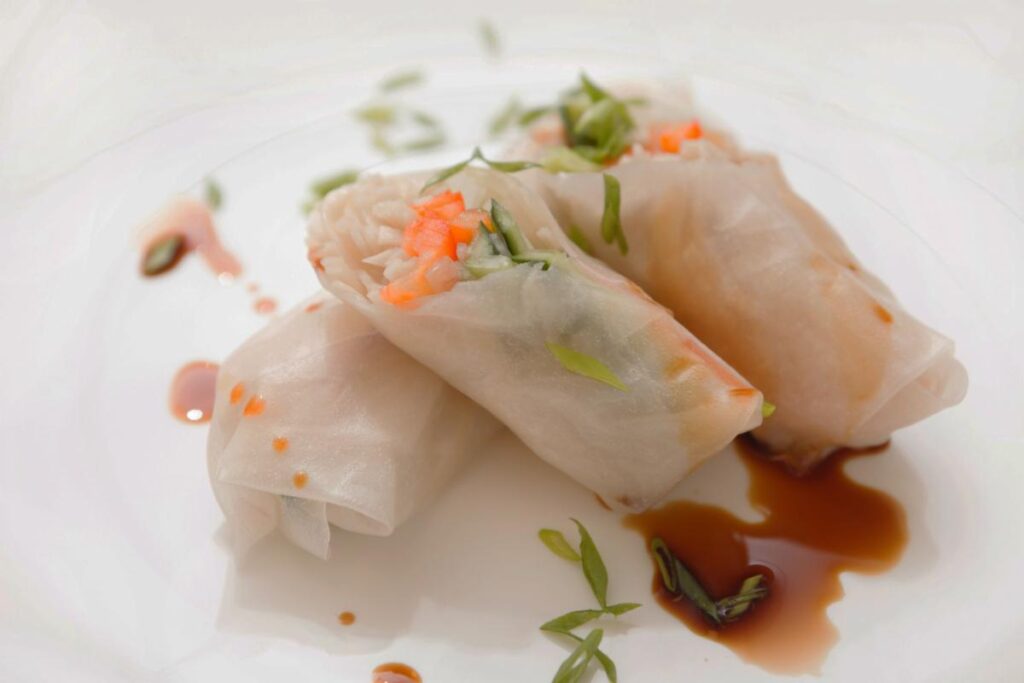
One famous legend, according to Kaiser Foodline, was about a wise scholar. The King wanted him to live and work in the palace. South China Morning Post explained that “accepting the King’s offer would have meant the scholar leaving his ailing mother alone at home in the mountains.” The scholar refused the honor. The King was enraged – he burned down the entire mountainside to force out the scholar and his mother. Mother and son died in the fire. The King regretted his actions and ordered that a day would be set aside to honor the scholar. Usually the first week of April, no one was allowed to light a flame on that day – which meant no cooking. Later known as the Ching Ming Festival, people came up with the idea of pre-cooking their vegetables and rolling them in thin pancakes, “linking spring rolls to loyalty and filial piety.”
A legend from the Ming Dynasty told the story of a Royal Minister who could write with both hands. He was accused of being dishonest because he worked so quickly and efficiently. The Emperor decided to test him. The Minister was given nine boxes of records to copy in 49 days. He worked day and night, with no time to eat. His wife, worried about his health, invented a rolled food that was nutritious, tasty, and easy to eat – the spring roll.
The Royal Minister met the deadline.
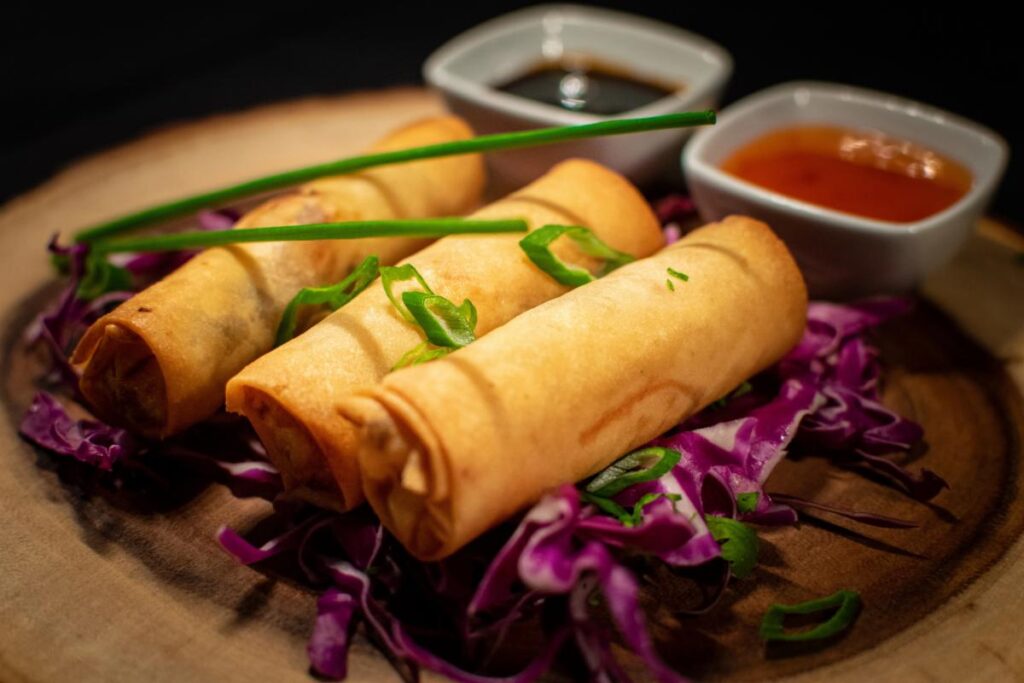
Later, during the Qing Dynasty, the rolls were deep fried, symbolizing gold bars and wealth in the year ahead.
The recipe migrated across Asia and later, the world. It evolved from thin, flat pancakes into the rolled fried version we know today, usually served with a dipping sauce. Depending on local tastes and ingredients, it assimilated into different variations and cultures.
Head over to Vietnam and they’re called Goi Cuon. Legend says they were invented for soldiers who needed a tasty meal on the go. Spring rolls were light, nutritious, easy to carry, and eaten cold.
Check out lumpia in the Philippines. Noczkus calls it a “simple yet lavishing finger food.” Introduced during Spain’s rule, lumpia used a rice or flour wrapper filled with assorted meat and vegetables, sealed with egg, and fried.
Don’t forget Japanese haramaki and Argentina’s empanaditas chinas. In the United States they arrived in the 1900s and evolved into egg rolls. In Israel they are usually longer, use local ingredients, and dipped into peanut sauce. Germans and Austrians call them fruhlingsrollen; Australians eat chiko rolls.
Proof that immigrants enrich our palates and the world.
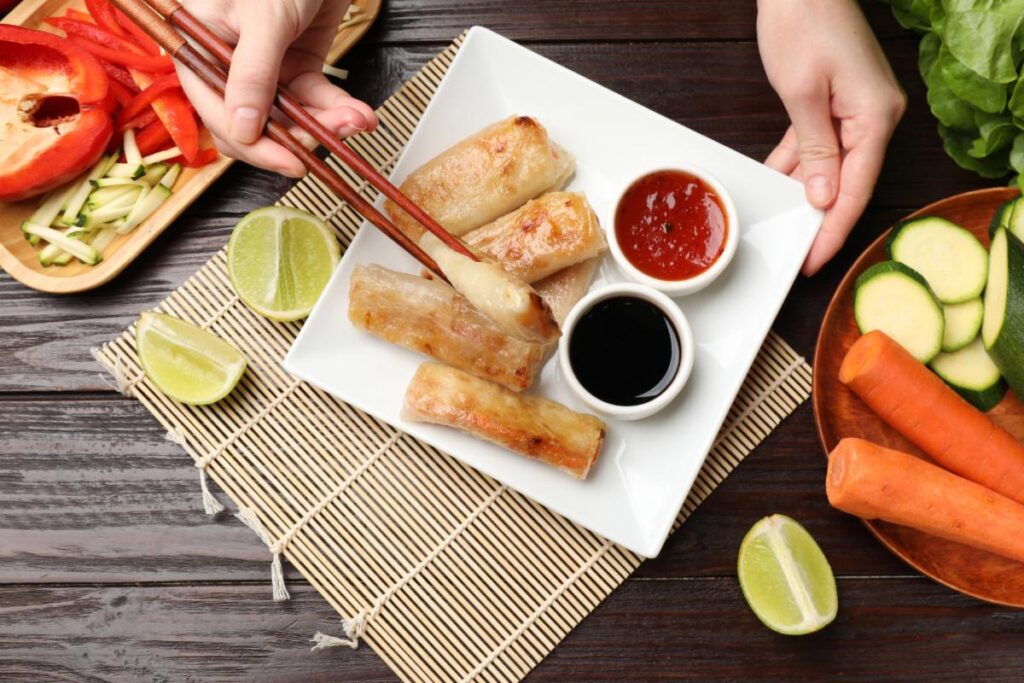
Today spring rolls are popular year-round. Whether at home or in a restaurant, they fit the menu. When you take that first bite, folklore claims they keep away bad luck and evil spirits. Another belief suggests that the tighter the roll, the tighter you hold onto your fortune. There’s even a modern “urban” myth that if you get an extra, unexpected spring roll in your takeout order it’s a sign of good luck or fortune.
Chow down and enjoy your good fortune!


