

Mango
The perfect subject for my return to blogging.
Tree Spirit Wisdom says that “mango reminds us to focus on happy times versus hard times.”
Good advice for a new year. My last blog was six months ago. I broke my hip, had surgery, a hip replacement, and rehab. Doc diagnosed 6-9-month recuperation. A long road.
Now I’m back!
Time to focus on happy.
Culturally, mangos are a ray of sunshine in an increasingly dark world. They’re the ultimate immigrants, with one thousand varieties grown around the planet and in outer space. Eaten fresh, dried, pickled, savory, or sweet, mangoes make us smile.
This yummy fruit has a long and colorful history. Native to southern Asia, experts believe mangos go back as far as the Bronze Age, 5000 years ago. That’s when the wheel was invented!
The National Mango Board reports that the seeds first came from India and immigrated to the Middle East, Africa, and South America around 300-400 AD. Spanish explorers brought mangos to Mexico in the 1600s. They arrived in Florida, U.S., in 1883.
Quite a resumé.
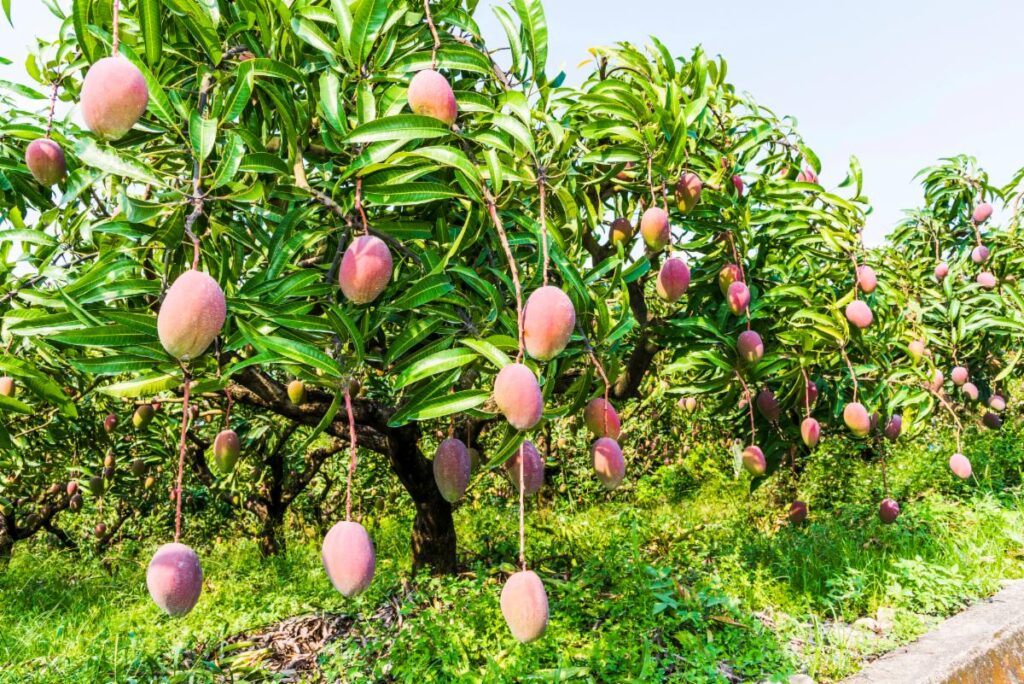
Mango trees thrive in subtropical and tropical climates. They can grow as tall as 30-100 feet, and live for a long time – some trees are believed to be over 300 years old. Their roots are long and deep, well anchored in the soil.
With all that history, mangos have become part of many cultures, in religion, art, poetry, literature, and local customs. The stories, rituals, and anecdotes highlight sharing, generosity, resilience, a symbol of home, love, prosperity, and rebirth.
While there are too many tales to include here, it’s clear that mangos stand out in history, folklore, mythology, and personal stories.
An ancient Hindu legend tells the story of a jealous witch. She incinerated the beloved sun princess, Surya Bai. A magnificent mango tree grew from her ashes. When a ripe mango fell to the ground, the princess was reborn. Mango thus became a symbol of love and rebirth.
Kama, the Hindu god of love (like Cupid) is believed to have tipped his arrows with mango tree flowers to bring love to gods and humans.
It beats online dating.
In India, mango leaves are hung around the home during celebrations and weddings. “Gansha, the elephant god, holds a mango in one hand as a symbol of prosperity . . . Buddhist text mentions the sacredness of mangos.” Buddha is said to perform miracles under mango trees.
More recently, Pakistan’s Foreign Minister gifted a crate of mangos to Mao Zedong during China’s cultural revolution (1968). Mao showed his love for the working class by sending the fruit to a factory.
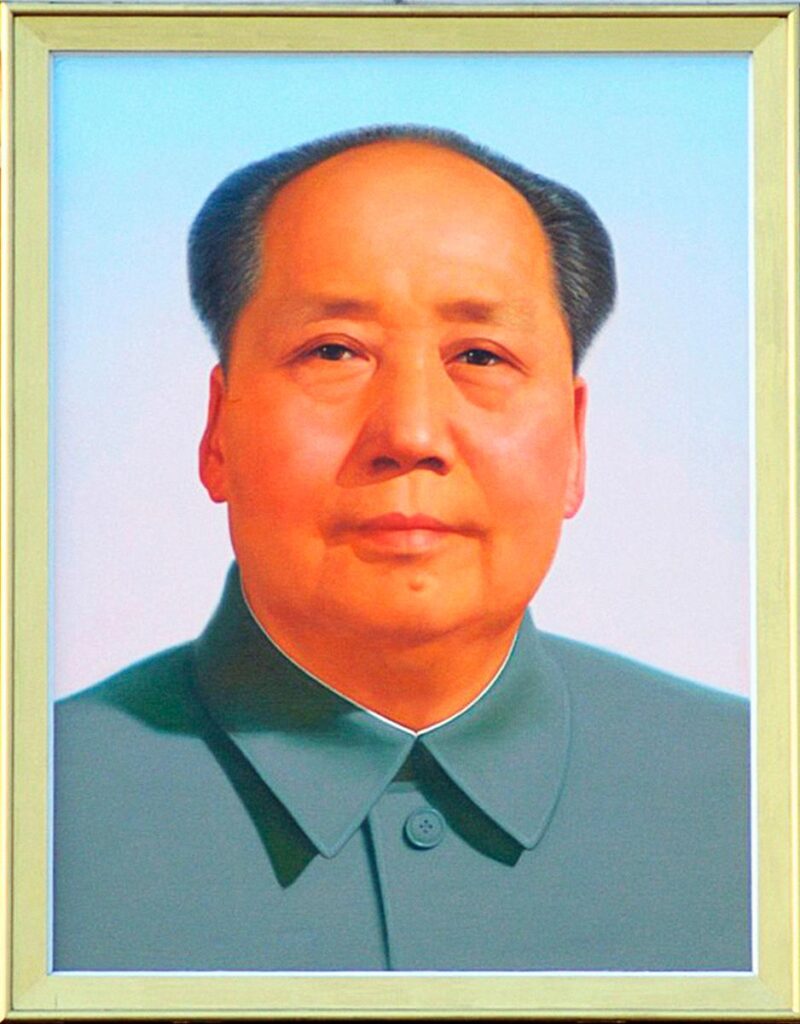
Holland Cotter wrote in Wayback Machine, that “in doing so, [Mao] created an instant cult . . . The mangos were preserved and revered as an emblem of the leader’s godlike love . . . objects of worship.” Cotter calls it a time “when mango mania was revolutionary.”
Americans got the idea more recently.
According to Goya, Ariana Grande tweeted a poem written in medieval India:
He visits my town once a year.
He fills my mouth with kisses and nectar.
I spend all my money on him.
Who, girl, your man?
No. A mango.
Now that’s true love.
Many celebrities like Oprah Winfrey, Miley Cyrus, and Dwayne “The Rock” Johnson have pledged their love for mangos. There are books about this delicious fruit, like Annabelle Tometich’s The Mango Tree, Bob H Myers Mango Bob, Bill Craig’s mystery, Marlow: Mango Run, and Laura Pauling’s Mango Tango Murder.
Check out the TV series, Mangos, or watch a movie like Bite of a Mango or The Taste of Mango. You can even go to the Florida Mango Festival which features displays of many varieties and offers a “guided mango tasting program.”
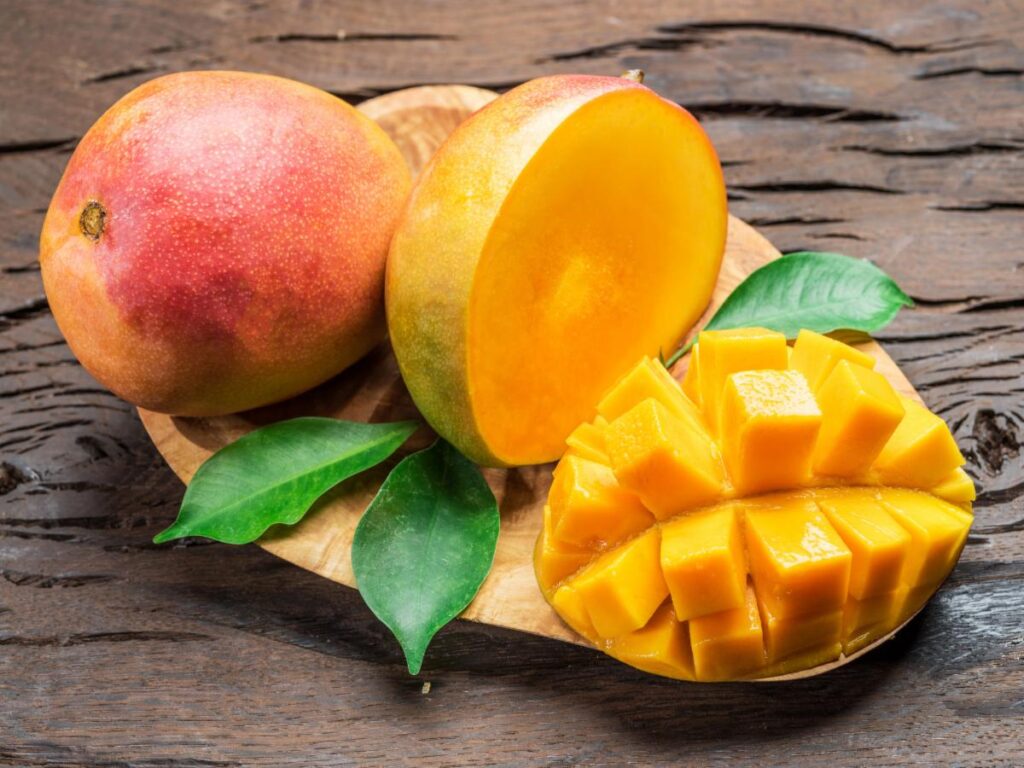
Best of all, savor fresh sweet mango, mango cheesecake, frozen mango margarita, mango sushi, mango salsa, mango slaw, and hundreds of yummy recipes.
Everything tastes better with mango!
LOOK FOR YOUR AMAZING FOOD HISTORY BLOG EVERY TWO WEEKS!


